

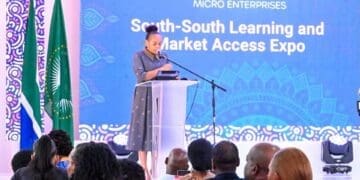




























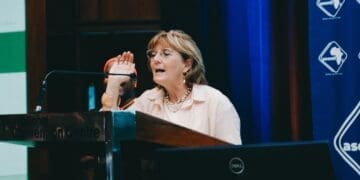





An eMalahleni engineering company is looking beyond South Africa for new customers as its founder, Nomagugu Mvelase, takes part in a Department of Trade, Industry and Competition (DTIC) mission to Uganda to explore export opportunities.
The outward selling mission, taking place from 22 to 25 November, brings together 17 South African companies from agriculture, agro-processing, iron and steel, and machinery. The programme includes business meetings and company visits.
Willem van der Spuy, the DTIC’s Deputy Director-General of Exports, said the mission is intended to strengthen trade links with East Africa.
“The Outward Selling Mission to Uganda is aimed at strengthening South Africa’s economic engagement with East Africa and expanding trade and investment opportunities for South African exporters and investors in this strategically important market,” he said.
He said the mission will connect businesses with buyers, distributors and investors. South Africa and Uganda recorded bilateral trade of just over R2 billion in 2025, including R1.8 billion in South African exports.
From industry experience to business ownership
Mvelase established Lizwile Engineering in October 2019 while working at Eskom. A quantity surveyor, she has more than 15 years’ experience, including work at Medupi and Matla power stations.
She identified a market gap in mechanical plant maintenance and the supply of suitable spare parts.
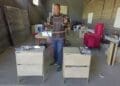
The company initially supplied valves and pipes before expanding into steel fabrication in 2021. It provides mechanical engineering, plant maintenance, refurbishment and steel products made to clients’ specifications.
Its target sectors include mining, power generation, water, agriculture, petrochemicals and rail. Lizwile operates from a 600-square-metre factory at Highveld Industrial Park in eMalahleni and is 100% black women-owned.
Growth and operating costs
Mvelase said the company’s turnover has grown from about R2 million to between R8 million and R9 million. Its workforce grew from one or two people to about 15, alongside investment in machinery and technology.
The DTIC lists the company as employing 14 people. Lizwile is also seeking land for its own premises.
Rising electricity and fuel costs remain challenges. She said it had cut overheads and improved efficiency without significantly increasing prices.
Building an African market
Mvelase told the DTIC that exporting has been her goal for several years.
“Exporting our products to international markets is something that we have been working on for the past three years. We are ready to explore export opportunities particularly in the rest of the Continent,” she said.
She said Lizwile was targeting Uganda’s agriculture, mining, waste management, construction, engineering and water sectors.
The DTIC has supported the company in exploring Ghana and Angola. Mvelase is also interested in Mozambique, Zimbabwe and the Democratic Republic of Congo.
She acknowledged the challenges of operating in a male- and white-dominated, capital-intensive industry, as well as competition from cheaper imports.
“I am determined to succeed and grow this business despite the challenges that I am experiencing as a woman trying to establish herself in the industry that is still predominantly male and white,” she said.
She sees the African Continental Free Trade Area as a way to widen access to customers and build partnerships across the continent.
The mission does not guarantee contracts, but could connect Lizwile with customers and partners. Export orders could increase sales, production and employment in South Africa. Her goal is a lasting engineering business across Africa.