











































More than 1,600 businesses have entered liquidation in South Africa in the first seven months of this year, highlighting continued pressure on companies despite a year-on-year decline in closures.
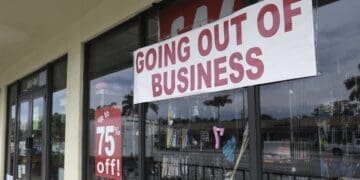
Statistics South Africa recorded 1,601 liquidations between January and July, down 4.9% from the 1,684 recorded during the same period in 2025. In July alone, 239 businesses were liquidated, 23.2% fewer than a year earlier. In the three months to July, liquidations fell by 13.9% year-on-year, from 825 to 710.
Despite the decline, the figures show that more than 1,600 businesses have been wound up in just seven months.
Business Unity South Africa (BUSA) has previously warned that rising input costs are putting pressure on companies’ margins and balance sheets.
In May, BUSA chief executive Khulekani Mathe said a sharp increase in fuel prices would “turn profitable businesses into loss-making enterprises”.
“This is no longer a short-term pricing shock that businesses can ride out,” Mathe said, adding that sustained increases in fuel costs translate into “higher operating costs, weaker balance sheets” and difficult decisions around employment, services and investment.
BUSA’s comments came after fuel prices were increased by between R3.27 and R5.27 a litre, but the organisation said the increases were adding to an already difficult operating environment.
The business body has also warned that weak economic growth, poor municipal performance and unreliable infrastructure continue to affect business decisions. In February, BUSA said weak municipal performance and infrastructure reliability were shaping day-to-day business decisions.
Not every liquidation means failure
The July figures also show an important distinction in the liquidation numbers.
Of the 239 businesses liquidated during the month, 208 were voluntary while 31 were compulsory. For the first seven months, there were 1,438 voluntary liquidations compared with 163 compulsory liquidations.
This makes the distinction between voluntary and compulsory liquidations important when assessing the health of the business sector.
The South African Restructuring and Insolvency Practitioners Association (SARIPA), which represents professionals in liquidation, insolvency and business rescue, has stressed the importance of early intervention to help distressed businesses avoid liquidation.
SARIPA national chair Jo Mitchell-Marais has argued that businesses should not necessarily see financial distress as the end of the road.
“Unfortunately, business rescue does carry a negative stigma, which is very disappointing,” Mitchell-Marais said.
She said business rescue should be viewed as a process that can “protect, preserve some value”and help strengthen a struggling business rather than treating it as evidence of failure.
Mitchell-Marais also warned that business rescue is not a quick fix, saying it requires planning, negotiation and stakeholder management to succeed.
Service business records most liquidations
The financing, insurance, real estate and business services sector recorded the highest number of liquidations among classified industries in July, with 41.
The sector has recorded 226 liquidations since the beginning of the year.
Trade, catering and accommodation followed with 173 liquidations during the same period.
But liquidations remain a concern.
The decline in liquidations compared with 2025 provides some relief, but the latest figures do not remove concerns about business sustainability.
South Africa recorded 2,501 liquidations in 2023, 2,626 in 2024 and 2,904 in 2025.
The figures show that businesses across several sectors continue to face financial pressure despite the decline in liquidations.