
































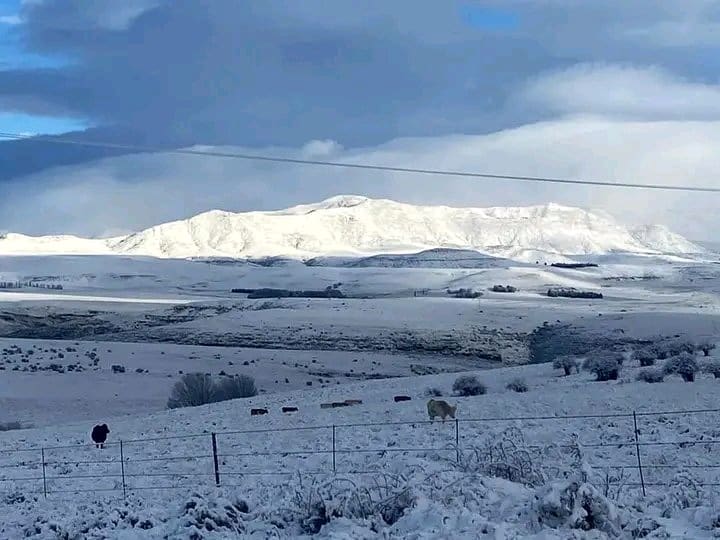
Recent severe winter weather and heavy snowfall across parts of South Africa have placed small-scale livestock producers under intense operational stress.
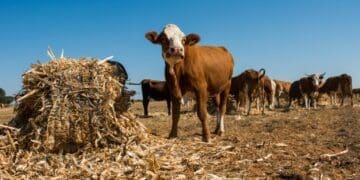
In the Free State, the African Farmers’ Association of South Africa (AFASA) called on the government to declare a disaster in the Fezile Dabi District Municipality, where severe cold, wet conditions, and snow caused the deaths of over 500 cattle in areas such as Heilbron and Koppies.
In Mpumalanga, provincial agriculture authorities recorded similar devastation, with more than 320 cattle dying during the same August cold snap.
The losses highlight the severe structural vulnerability of emerging livestock businesses. As climate models point towards volatile weather cycles, transitioning from freezing winter rains to summer heatwaves and potential El Niño-driven dry spells, small-scale farmers face a crucial question of, can emerging farming SMMEs afford the infrastructure required to climate-proof their herds before extreme weather triggers catastrophic financial losses?
To protect animals from both temperature extremes, farmers require multi-seasonal infrastructure. According to equipment suppliers and agricultural retail pricing in South Africa, building a basic enclosed steel or timber-frame shelter to shield livestock from freezing rain requires an upfront capital outlay between R15,000 and R45,000. To prepare for summer heat stress, industrial high-density shade netting setups demand an additional R5,000 to R12,000.
Water security and supplementary nutrition add further heavy cost layers. Commercial water tank distributors quote standard 5,000-litre to 10,000-litre JoJo storage tanks between R5,500 and R13,000, while off-grid solar borehole pump installations range from R35,000 to R85,000 depending on depth and water flow.
During severe winter spells, small herds also require energy licks and extra fodder, adding an ongoing operational expense of R1,500 to R4,000 per month.
State’s warnings and infrastructure deficits widen risk gap
In an official advisory issued as freezing temperatures swept the province, the Free State Department of Agriculture, Rural Development and Environmental Affairs urged livestock producers to move animals into sheltered locations with dry bedding and increase feed rations to maintain core body heat.
However, government extension officers acknowledge that for smallholders lacking proper barns, following these guidelines requires capital that many simply do not have.
For commercial livestock operations, installing protective steel shelters, automated watering troughs, and solar-powered boreholes is a standard, tax-deductible capital expense. For smallholder farmers operating on communal land or leased state farms, securing the upfront capital remains an immense hurdle because commercial banks routinely deny infrastructure loans without formal land title deeds as collateral.
Muzi Mhlongo, a smallholder cattle farmer operating in KwaZulu-Natal, noted that the cost of preventative infrastructure often exceeds a small farm’s annual profit margin.
“When severe cold or heat strikes, you are forced to make immediate financial trade-offs,” Mhlongo said. “Building a proper steel structure to shield 20 cows from freezing rain or summer heat costs over R30,000. For a small farmer selling just a few head of cattle a year to cover feed, veterinary drugs, and transport, finding that kind of cash upfront is nearly impossible. You end up risking the weather because you simply don’t have the liquidity.”
Double-edged seasonal pressure drains cash reserves
The financial squeeze is compounded by the rapid transition between seasonal extremes. Having just spent extra working capital on winter supplementary feeds and energy licks to help livestock maintain core body heat, small farmers enter the warmer months with depleted cash reserves.
As summer approaches, heat stress poses an equally quiet, costly threat. High ambient temperatures reduce feed intake, lower conception rates in breeding cows, and increase mortality in young calves.
Agricultural economist and rural development specialist Dr Ndivhuho Raphulu emphasised that infrastructure funding must be viewed as an economic necessity rather than a secondary luxury.
“According to current livestock auction data, losing a single breeding bull or several pregnant cows represents an immediate asset loss of R15,000 to R50,000,” Raphulu stated. “That loss alone matches or exceeds the cost of installing basic shade structures, windbreaks, and water storage. The core problem is that our agricultural finance models do not support preventative infrastructure for smallholders. We wait for a disaster to declare an emergency, rather than financing the JoJo tanks, solar pumps, and shelters that prevent farm insolvency in the first place.”