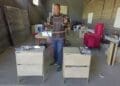








































Katlego Benedict Ngakane was still a student at Tshwane University of Technology (TUT) when he started pursuing his ambition of becoming an entrepreneur. He began by selling food from his garage, later rented premises and grew the operation into KEK Trading (Pty) Ltd, a food business on Vilakazi Street in Soweto.
Today, the business employs six people, operates a restaurant and takes on catering work. Ngakane’s first major funding opportunity came through TUT’s Centre for Entrepreneurship Development (CED).
He completed its free six-month entrepreneurship programme, attended training sessions and boot camps, refined his business idea and pitched it. He was awarded a R160,000 grant, which helped him acquire a shipping container and convert it into a commercial kitchen.
He is now seeking a further R800,000 to expand his business into industrial kitchen, bakery, bar, car wash and sweet shop to improve his facilities and take on larger orders.
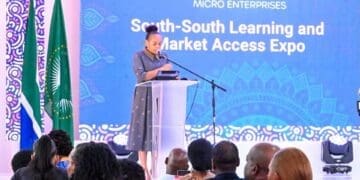
Ngakane shared his experience at the Startup Festival South Africa 2026, held on Tuesday, at the Tshwane School for Business and Society in Pretoria. The festival took place during Global Entrepreneurship Week under the theme Entrepreneurs Thrive Here, It gave entrepreneurs a chance to learn about funding, business support and opportunities to secure contracts
Ngakane said his current facilities were limiting the work he could take on.
“I was limited in terms of quality offering and production capacity,” he said.
He explained that he receives contract opportunities but struggles to deliver efficiently because his kitchen does not meet the required standards.
“I often get contracts, but I can’t deliver on time efficiently because my kitchen is not compliant.”
He wants to use the funding to prepare new premises, build a proper kitchen and buy a delivery vehicle. Preparing the premises alone will cost about R150,000. He also told the audience that he already had a contract and a letter of intent lined up. His longer-term plans include a bakery and other services, with a target of employing at least 20 people.
“With this property that is new, I’m targeting to have at least 20 people. As soon as the project is done, at least 20 people will be on payroll,” he said.
Preparing a business to access funding
Dr Patrick Ebewo, director of TUT’s CED, explained that participants in the free six-month programme must attend training sessions and boot camps, refine their business ideas and pitch proposals before they can be considered for funding. The centre also provides coaching, business development support and links to other funding institutions.
The Gauteng Enterprise Propeller (GEP) also outlined its support for businesses. GEP explained that the agency offers assistance with compliance, equipment, marketing, branding and product testing.
One option is contract finance for businesses that have secured work but lack the capital to deliver it.
“If you’ve been awarded a contract and you don’t have money to finance that contract, you come to GEP with a signed contract. We satisfy ourselves that this contract is viable and existing. We assist you with the contract,” the representative said.
GEP also offers growth finance of up to R5 million to qualifying businesses, requiring a bankable business plan and three-year financial projections. Its grant funding is paid to approved suppliers rather than directly to applicants.
An Accenture SA representative, Zandile Niamela, said training and funding alone would not help businesses scale if they could not access customers.
“Businesses do not scale through training alone. They scale through customers and revenue,” she said.
She highlighted the barriers SMEs face when entering corporate supply chains, including requirements for compliance records, audited financial statements, customer references and a proven track record. She challenged larger companies to make supplier development programmes lead to actual contracts, purchase orders and revenue.
“Somebody has to be your first customer,” she said.