














































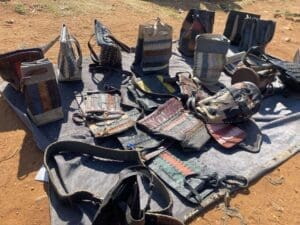
Rows of patchwork handbags, sling bags and belts lie neatly arranged on the ground, their colours and textures. For the artisan behind them, however, these are more than handmade accessories.
Bafana Sithole (56), from Meadowlands in Soweto, started his own business, driven by his love for fashion.
One bag sold means R300 in revenue. Ten bags sold would generate R3,000 in turnover. Thirty bags would bring in R9,000 before deducting the costs of leather, thread, glue, transport, and other materials.
It is a small enterprise operating from a blanket, but it forms part of a much bigger economic story.
South Africa’s township economy is estimated at around R900 billion annually, according to Standard Bank’s 2025 Township Informal Economy Report. The bank’s research found that nearly 80% of surveyed township businesses were unregistered, while many entrepreneurs relied on their own savings to keep their businesses running.
Stitched by hand, built by necessity
Sithole says he taught himself the craft and turned his skills into a source of income when employment opportunities were difficult to find.
“I started making these bags and belts by hand to feed my family,” he says. “There were no jobs, so I had to create my own.”
His production process is labour-intensive. Materials must be sourced, leather must be cut, holes punched, and pieces stitched together by hand. The finished products are assembled from colourful off-cuts, giving each bag a distinctive patchwork appearance.
The work takes time, and the R300 price tag is not pure profit.
Still, the ability to turn raw materials into a product that can be sold for R300 represents something important, a skill converted into a business.
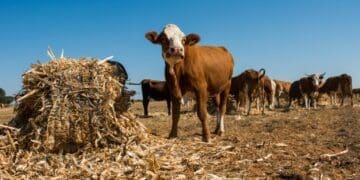
South Africa’s township economy has become an increasingly important part of conversations about entrepreneurship, employment and inclusive growth.
According to Standard Bank’s 2025 research, based on more than 250 businesses across five provinces, the township economy was described as a roughly R900 billion sector. The report found that surveyed businesses faced major obstacles, including limited access to finance, high input costs, and restricted access to formal markets.
For entrepreneurs like Sithole, the challenges are many.
There is no permanent retail space. Rain can disrupt trading. Customer traffic can determine whether a day produces income or nothing at all. Buying materials in small quantities can also be more expensive than buying in bulk. But the business continues.
“They [customers] can see it’s handmade,” he says.
That distinction could matter for the business’s growth. In a market crowded with cheaper imported and factory-made goods, a locally produced product has to compete on more than price. Quality, originality and customisation can become a small business’s competitive advantage.
Standard Bank’s township economy research similarly identified access to finance, markets, skills and infrastructure as important barriers facing township businesses.
Stats SA reported that the official unemployment rate rose to 33.6% in the second quarter of 2026, while unemployment among young people aged 18 to 34 reached 47.4%. The informal sector added 34,000 jobs during the quarter, even as employment in the formal sector declined.
These figures help explain why self-employment and small enterprises remain important sources of livelihood for many South Africans. Not everyone has access to capital, a business loan or a formal workplace.
Sithole hopes for better equipment, a proper workshop, and the opportunity to reach more customers. There is also the possibility that growth could eventually allow him to train or employ others.