


















































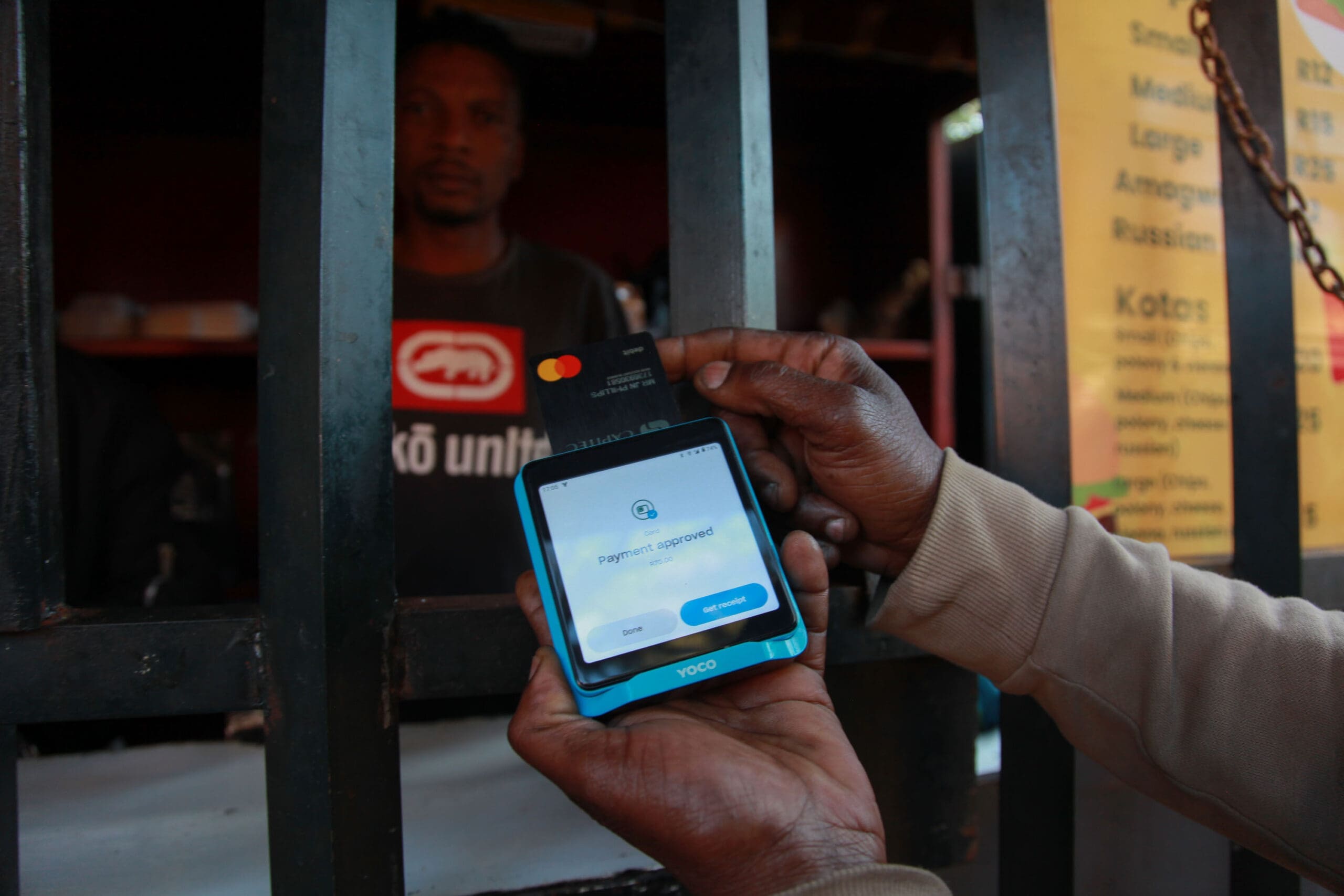
The National Consumer Commission (NCC) has warned spaza shop owners and other informal retailers against imposing undisclosed charges on customers who choose to pay for purchases by card.
The warning comes amid growing complaints from consumers about retailers adding fees to the advertised price when customers use card payment facilities.
Some consumers have reported being asked to pay an additional R2, R5 or even R10 when using a bank card. Others have been required to meet a minimum spending amount before being allowed to pay by card.
The commission says such practices amount to non-compliance with the Consumer Protection Act (CPA) where customers are not informed about additional costs before completing a purchase.
NCC targets undisclosed charges
NCC spokesperson Phetho Ntaba said consumers were raising concerns about additional charges being disclosed only after they had decided to make a purchase.
“Now we’ve got these issues with spaza shops or informal businesses where they are not really disclosing these prices. They are surprising the consumer,” Ntaba said.
He said the commission recognised that consumers may have limited alternatives, particularly in communities where spaza shops are an important source of everyday goods.
“We understand that in many cases, consumers do not have the choice to leave that particular store and go to the other store. So that is why they are really, you know, complaining,” he said.
Card surcharges prohibited
Section 23 of the Consumer Protection Act requires suppliers to display the price of goods and prohibits them from demanding a price higher than the displayed amount, subject to the exceptions contained in the Act.
The Payments Association of South Africa (PASA) has stated that merchants are not permitted to charge customers extra because they choose to pay by card.
PASA has said acquiring banks, which provide merchants with card-payment services, are responsible for enforcing the no-surcharge rule with their merchant clients.
Complaints at spaza shops
The latest warning comes after similar complaints have been reported at spaza shops in different parts of the country.
In Bonteheuwel, Cape Town, residents complained about spaza shops adding charges to card transactions for electricity and airtime.
The Somali Business Association confirmed at the time that some of its member businesses had been charging between R2.50 and R5 for such transactions before agreeing to stop the charges following discussions with local authorities.
The NCC said it will engage with formal and informal business structures to improve compliance with consumer-protection laws.
“We are saying it’s about time that we reach out to these businesses, their formal structures, informal structures, reach out to them, nudge them into compliance with the provisions of the Consumer Protection Act and other laws of the Republic,” Ntaba said.
Businesses face penalties
Businesses that fail to comply with consumer-protection requirements could face financial penalties.
Under section 112 of the Consumer Protection Act, the National Consumer Tribunal may impose an administrative fine of up to the greater of R1 million or 10% of a supplier’s annual turnover.
The penalty depends on the circumstances of each case, including the seriousness and duration of the conduct, losses suffered by consumers, the supplier’s conduct and whether there have been previous contraventions.
Failure to comply with a compliance notice can result in the matter being referred to the National Consumer Tribunal.
The NCC has called on consumers who encounter undisclosed charges to keep their proof of payment and record the name and location of the business when reporting a complaint.