






































The proposed Vaal Special Economic Zone (SEZ) is expected to support the revival of the Vaal region’s industrial base while creating opportunities for local businesses to participate in manufacturing, services and supply chains.
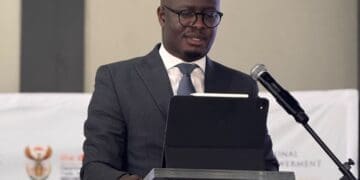
Deputy Minister of Trade, Industry and Competition Zuko Godlimpi says the SEZ is designed to restore industrial capacity through coordinated investment, infrastructure development and targeted support for emerging businesses.
Speaking at a public consultation meeting held at the Vereeniging Town Hall, Godlimpi said the region retains strong industrial potential.
“This region already has strong foundations. It has industrial capacity, strategic location advantages, access to major transport routes, and a workforce with experience and potential,” he said.
The SEZ will focus on sectors including green industrialisation, agro processing, logistics, energy and the blue economy linked to the Vaal River.
The engagement forms part of the formal consultation process led by the DTIC in partnership with the Gauteng Provincial Government and Sedibeng District Municipality. Last month, Minister Parks Tau issued a 30 day public notice inviting comments on the proposed designation.
The initiative follows years of research into the decline of the region’s manufacturing base and policy options to reverse deindustrialisation.
The Vaal region, which includes industrial hubs such as Vereeniging and Vanderbijlpark, was once a major manufacturing centre driven by steel, petrochemicals and heavy industry.
“By creating jobs, supporting businesses, and restoring economic activity, we directly address some of the root causes of crime. Economic inclusion is one of the most effective tools for building safer communities,” he added.
Provincial government backs inclusive growth model
Gauteng Department of Economic Development Head of Department Motlatjo Moholwa said the province is facing economic pressures that require targeted industrial interventions.
“As Gauteng, we are confronting a decade of slow growth, declining investment, and rising unemployment,” he said.
Moholwa said the SEZ must go beyond infrastructure delivery and focus on inclusive participation in the economy.
“The Vaal SEZ is not just about infrastructure, it is about inclusion. It is about integrating township and rural economies, empowering black industrialists. Creating real opportunities for young people and women to participate meaningfully in industrial growth,” he said.
He added that coordinated investment and partnerships are key to growth and employment creation.
Entrepreneurs have opportunities to participate
During the construction phase, the project is expected to create more than 4,000 direct jobs and over 1,300 indirect jobs. With job creation one of the key objectives, Godlimpi noted that there will be opportunities for local contractors, artisans, suppliers, and workers.
Entrepreneurs who attended the consultation meeting welcomed the proposed SEZ, saying it could help revive business activity in the region.
A Vereeniging construction supplier, Kagiso Mohaka, said local businesses want meaningful participation in procurement processes.
“Projects like this can change things for us if local businesses are actually given a fair chance to supply. We have the capacity, we just need access,” he said.
Currently in the public consultation phase, the Vaal SEZ remains a long-term development with timelines and funding still being finalised.
“Economic transformation cannot happen without human development. The SEZ will stimulate demand for skills training, apprenticeships and partnerships with educational institutions. Young people in this region must not remain spectators, they must become participants in the economy,” Godlimpi said.