
















































Businesses in South Africa and Zimbabwe could have more opportunities to trade, invest and enter new markets as the two countries strengthen economic ties.
Trade between the two countries reached R81 billion in 2025, nearly double the amount recorded in 2021. Zimbabwe is now South Africa’s second-largest export destination on the continent.
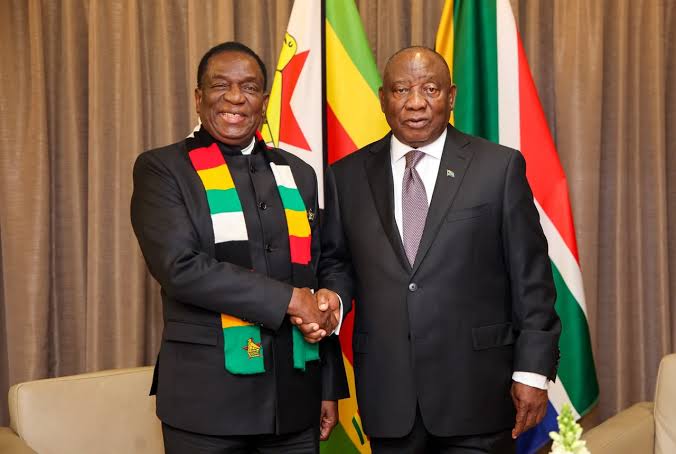
The figures were highlighted at the South Africa-Zimbabwe Business Forum at Gallagher Convention Centre in Midrand on Friday, where business and government leaders discussed ways to increase trade, investment and cooperation between the two countries.
President Cyril Ramaphosa said the growing trade relationship should lead to more investment and economic activity.
“Bilateral trade between South Africa and Zimbabwe reached R81 billion in 2025. This was nearly double what it was in 2021,” Ramaphosa said.
He said the two countries should also work together on infrastructure that businesses depend on.
“We should be working together to build the bridges, roads, dams, airports, health facilities and schools that will drive our economies into the future,” he said.
Businesses need easier cross-border trade
Trade and Industry Minister Parks Tau said the forum aimed to find practical ways to strengthen the business relationship.
“The Business Forum provides an important platform for government and the private sector to engage on practical measures aimed at increasing bilateral trade, facilitating investment and fostering industrial cooperation that delivers mutual benefit to both countries,” Tau said.
Discussions included transport and logistics, manufacturing, technology transfer, regional value chains, capital equipment and cooperation between industrial and special economic zones.
These areas matter to smaller businesses because transport delays, high logistics costs and difficulty accessing suppliers and markets can make cross-border trade harder.
Ramaphosa said the trade relationship is also uneven, with South African exports to Zimbabwe worth roughly eight times more than Zimbabwean exports to South Africa. South Africa mainly sends finished goods, while Zimbabwe exports raw and semi-processed products such as coal, chromium ore, gold, semi-finished steel and tobacco.
He said businesses could work together to process more of these resources locally.
“We need to explore potential joint ventures between South African and Zimbabwean firms to realise the full value of these resources here,” Ramaphosa said.
Partnerships could open regional markets
Ramaphosa pointed to the Musina-Makhado Special Economic Zone as an example of how cross-border economic activity could support mining, agriculture, agro-processing, milling and packaging.
These industries could create opportunities for SMEs that provide transport, construction, maintenance, packaging and other services.
Improvements at the Beitbridge border could also support companies that move goods between the two countries. Ramaphosa said trucks that previously waited several days to cross now take an average of about 14 hours, while a One-Stop Border Post is under development.
Zimbabwean President Emmerson Mnangagwa said the two countries should move beyond simply selling goods to each other.
“Our cooperation must not be limited to how much we sell to one another. We need to consider partnerships across the borders, that is, what we can do together,” he said.
He called for more joint investment, research, innovation and industrial development.
Mnangagwa said these partnerships could also help companies reach markets beyond South Africa and Zimbabwe.
“Then, our businesses can use these partnerships to reach markets beyond Zimbabwe and South Africa. That is how a bilateral relationship begins to contribute to the transformation of an entire region,” he said.
Ramaphosa said stronger economic ties should also create jobs and opportunities, particularly for young people and women.
“In the times of struggle, solidarity meant jobs, investment and a trading relationship that benefits both our peoples,” he said.
The two countries also signed agreements through the Bi-National Commission, covering areas of cooperation between the two countries as the business relationship expands.