







































The Department of Small Business Development wants to improve how it tracks businesses receiving government support, shifting its attention from the number of enterprises assisted to how many are actually growing.
Small Business Development Minister Tembisa Stella Ndabeni said between 20% and 25% of businesses supported in each category had moved to the next level, based on the department’s annual reports and assessments.
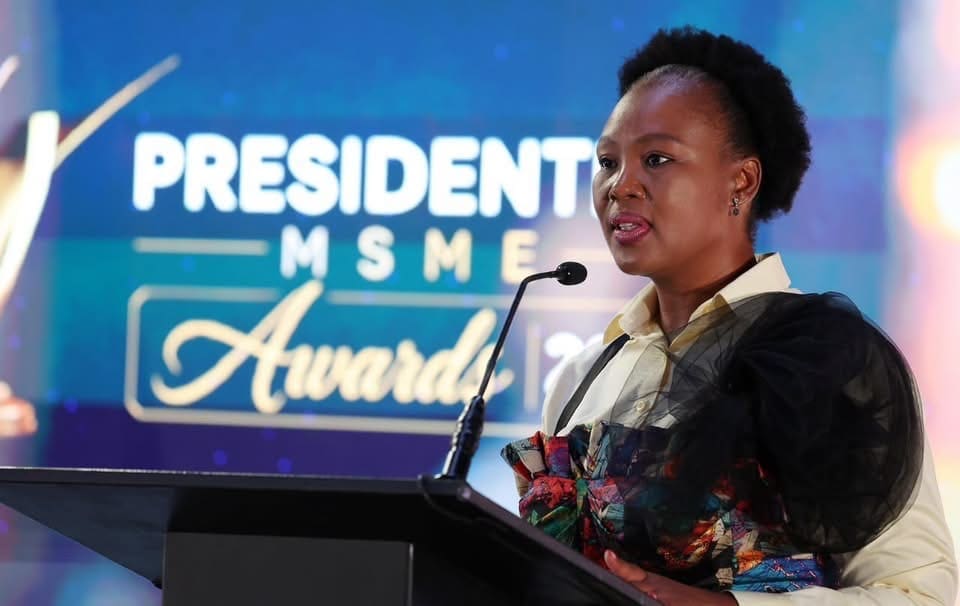
Speaking at a media briefing during the Presidential MSME Awards, Ndabeni said the government wants to measure the impact of its support rather than simply count beneficiaries.
“We don’t want to be numbers driven. We want to be impact driven,” Ndabeni said.
She did not specify the period covered by the figures or explain how the department measures whether a business has moved to the next level.
The department aims to support one million enterprises by 2030, including businesses owned by young people, women, people with disabilities and military veterans, as well as entrepreneurs in townships and rural communities.
Tracking growth beyond funding
Ndabeni said the government is working with development finance institutions and financial partners through co-funding, credit guarantees and equity support.
She referred to R2.8 billion in financing from partner institutions and credit guarantees. She also said women-owned businesses received R2.2 billion through lending facilities to microfinance intermediaries, accounting for 94% of microfinance disbursements.
Some programmes offer interest rates as low as 5%, repayment periods of up to 60 months and repayment moratoriums of up to six months.
However, access to finance is only one part of growing a business.
Patrick Makape, chairperson of the board of the Small Enterprise Development and Finance Agency (SEDFA), said bringing financial and non-financial support together would help businesses prepare for investment and receive assistance after funding.
The integration brings together functions previously handled by the Small Enterprise Finance Agency (Sefa), the Small Enterprise Development Agency (Seda) and cooperative support structures. These include financing, business training, coaching and market access.
Makape said businesses need to be assessed, guided and prepared before receiving funding, with support continuing afterwards.
Kgalaletso Tlhoaele, Absa Group’s executive for enterprise development, also identified monitoring and evaluation as a gap.
“One of the key gaps that we have is the monitoring and evaluation of our beneficiaries,” Tlhoaele said.
He said a programme was being implemented to track beneficiaries’ progress and establish whether they were growing into higher business categories.
Market access and compliance remain challenges
Ndabeni said getting products onto retail shelves did not always guarantee long-term business success. She cited a small producer in the Western Cape that secured retail shelf space but struggled to afford rebates and other charges after 12 months.
She encouraged smaller suppliers to work together through an aggregator model so they could combine their capacity and fulfil larger orders. Agro-processors, for example, could source from small farmers and build stronger supply chains.
The minister also said government wanted established businesses to bring smaller enterprises into their supply chains. Award winners should receive mentorship during their first three years to help them become sustainable before mentoring others.
Compliance is another challenge. The department is engaging municipalities about temporary identification certificates to help spaza shop owners apply for the spaza shop fund. SEDFA also provides assistance with requirements such as product approvals.
Ndabeni pointed to the Public Procurement Act as an opportunity for SMEs to secure government contracts. She encouraged entrepreneurs to participate in municipal local economic development forums and raise their business needs.
The department is also preparing businesses for opportunities linked to China’s zero-tariff policy, including helping exporters meet market requirements. Government is engaging financial institutions and regulators on funding barriers, credit guarantees and efforts to revitalise venture capital.
Ndabeni further said the President was finalising the process towards appointing a Small Enterprise Ombud to address unfair business practices affecting small enterprises.
Lebohang Dhludhlu of Nkanyezi Farming in Witbank, Mpumalanga, was named the overall winner and received R2 million. She said she plans to use the money to buy a truck.
The awards recognise businesses across 10 categories, with each category offering R1 million shared among the top three winners. Ndabeni said the awards also provide exposure and connect entrepreneurs with potential partners and markets. Nominations move from district to provincial and national level.