








































Global oil prices are set to rise and shipping companies are taking longer routes around Africa as the war involving the US, Israel, and Iran escalates. Recent strikes on Iran and Iranian retaliation have blocked the Strait of Hormuz, a vital route for global oil shipments.
South African businesses are already feeling the effects of Middle East tensions. Shipping delays and rising freight costs are creating uncertainty, and fuel prices are expected to increase in April. Small businesses are struggling to plan and cover expenses, showing how events thousands of kilometres away can quickly impact the local economy and consumers.
Middle East conflict and shipping delays
The crisis began on February 28 when US and Israeli forces carried out military strikes on Iran. In retaliation, Iran blocked ships from passing through the Strait of Hormuz, a narrow waterway that handles about 20% of the world’s daily oil supply and roughly 30% of Europe’s jet fuel.
Major shipping lines including Maersk, MSC, CMA CGM, and Hapag-Lloyd have suspended operations through the strait. Vessels are now rerouting around the Cape of Good Hope, adding up to two weeks to Asia-to-Europe journeys. More than 150 ships are currently anchored outside the strait.
“Until further notice, all sailings on the IMX service will be rerouted around the Cape of Good Hope. The safety of our crews, vessels, and customers’ cargo remains our key priority,” Hapag-Lloyd said.
Mark Lacey, head of thematic equities at Schroders, warned: “Many analysts are warning that a prolonged Strait of Hormuz disruption could push oil prices significantly above $100 a barrel, potentially sparking a 1970s-style energy shock. Even if OPEC+ increases production, supply routes remain constrained, and the global oil market has very little buffer for shocks.”
Fuel and shipping costs squeeze small businesses
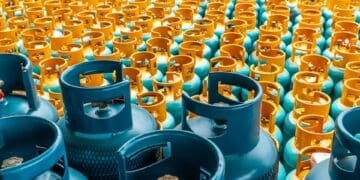
South Africa imports around 85% of its crude oil, so rising global oil prices are feeding directly into local fuel costs.
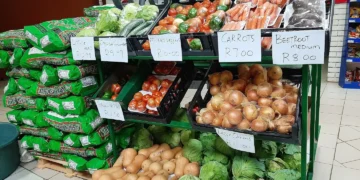
“Every day I spend money on fuel just to get to town to sell my food. The prices are always going up, but my customer can’t afford to pay more with this inflation, and I have to cover my costs. Sometimes I bring less food or raise prices a little, but even then it’s hard to make enough profit. How can small businesses like mine survive when we have to deal with these constant increases?” Said Cynthia Ntemane from Matsulu, who sells cooked meals in town every day.
Thabo Moloi, who runs Thabo Apples, a store selling iPhones and accessories, said shipping delays are also hurting his business.
“I rely on shipments from overseas to keep stock. Since the Middle East conflict, containers are taking longer to arrive, and freight fees have gone up. I either have to raise prices or accept smaller profits. It’s tough because I still have bills waiting for me,” he said.
Ports remain ready despite rerouting
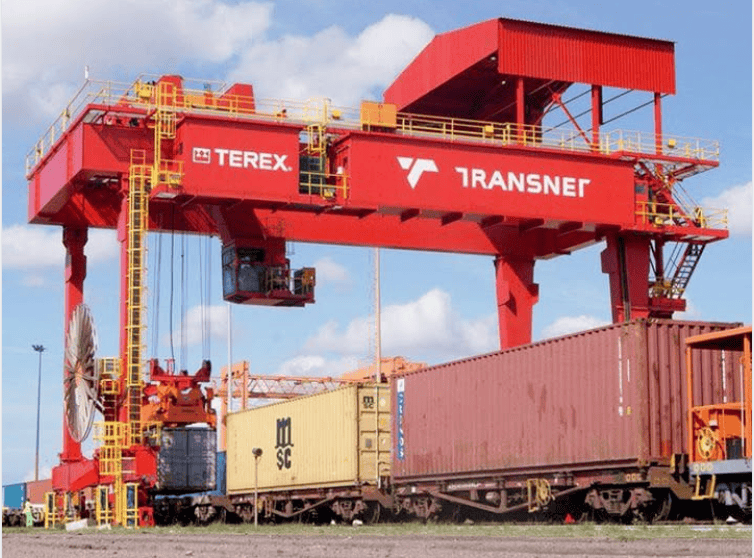
The Transnet National Ports Authority said ports have not yet seen a significant rise in vessel traffic.
“The country’s ports have not yet experienced a meaningful increase in vessel traffic despite escalating tensions in the Middle East and shipping companies diverting routes away from the Strait of Hormuz,” TNPA said.
The authority added that it remains operationally ready if volumes increase.
Economic effects and interest rates
Higher oil prices and shipping costs could also affect South Africa’s economy. Rising fuel costs can increase inflation, making goods and services more expensive. The Reserve Bank will need to consider these factors when deciding on interest rates, which affect loans for households and businesses.
The Treasury projects a primary surplus of R131 billion for the fiscal year ending March 2027, R60 billion more than last year. This surplus is expected to help stabilize South Africa’s debt, but if revenue falls or government spending rises sharply, the fiscal balance could be affected.
Ramaphosa calls for African self-reliance
President Cyril Ramaphosa said Africa must reduce dependence on imports and strengthen local energy and trade systems.
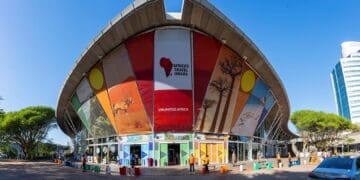
Speaking at the African Energy Indaba in Cape Town, he said, “Now we are going to be a victim of conflicts that are taking place far away from where we are.”
He urged countries to turn plans into action by building industries and energy projects that create jobs and support economic growth.
“The present moment calls for unity of effort. It calls for partnerships that recognise that Africa’s growth is not a risk to be managed, but an opportunity to be realised,” he said.
For South African businesses, this conflict highlights the importance of planning for rising costs, shipping delays, and supply chain disruptions while considering long-term strategies for resilience and self-reliance.