

















































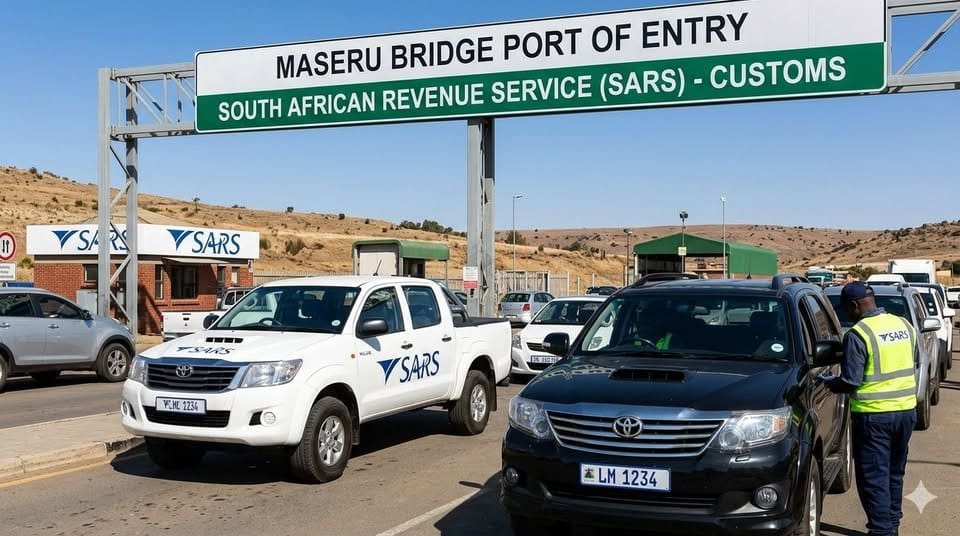
South Africa’s latest customs modernisation effort is being closely watched by small businesses as the South African Revenue Service (SARS) rolls out a mandatory digital declaration system for foreign-registered vehicles crossing the country’s borders.
The system requires travellers entering or leaving South Africa in foreign-registered vehicles to submit declarations through the SARS Traveller Management System before arriving at a port of entry.
The move forms part of SARS’ broader drive to digitise customs processes, improve compliance, and streamline border management.
For SMEs involved in cross-border trade, however, the success of the system will ultimately be measured not by policy objectives but by whether it reduces delays, lowers operating costs, and improves the movement of goods.
Border efficiency matters for small businesses
Cross-border trade plays a critical role in the operations of thousands of SMEs across Southern Africa. Small transport operators, informal traders, importers, exporters, and logistics businesses often depend on predictable border processing to maintain cash flow and meet customer delivery timelines.
According to SARS, the new digital declaration process is intended to replace fragmented manual systems with a more efficient and transparent platform that enables travellers to submit information before arriving at the border. The revenue service says this will support risk-based screening, improve coordination between authorities, and create a smoother border experience.
For businesses, even modest reductions in waiting times can have a meaningful financial impact. Long border queues often translate into higher fuel costs, additional wage expenses, delayed deliveries, and inventory disruptions, all of which place pressure on SME margins.
For independent operators, these bottlenecks are a direct threat to viability.
“When you only run two or three vehicles, your margins are razor-thin,” says Tshepo Maruping, owner of a small logistics firm operating between Gauteng and Zimbabwe. “A bad delay at a high-volume crossing like Beitbridge or Lebombo doesn’t just delay a delivery; it can eat up an entire week’s profit in idling fuel and driver overtime. If this digital system actually cuts the queue, it’s a lifesaver. If the tech glitches, small guys like us absorb the entire cost.”
Early signs point to strong uptake
SARS reported that more than 38,900 Temporary Import Permits (TIP) had already been issued before the system’s launch, suggesting that many travellers and operators moved quickly to comply with the new requirements.
The permits allow foreign-registered vehicles to operate legally in South Africa for up to six months and can be used for multiple border crossings without requiring a new application each time. SARS has also emphasised that the permits are issued free of charge.
SARS Commissioner Dr Johnstone Makhubu said the initiative is designed to simplify compliance while strengthening oversight at South Africa’s ports of entry.
“The obligation to declare goods and vehicles at our borders is firmly rooted in South African law, which clearly states that everyone must declare everything they bring into or take out of the country,” Makhubu said. “Modernisation is not about adding red tape but replacing manual, fragmented processes with digital systems that are simpler, faster, and more transparent.”
Challenges could emerge during transition
While the long-term objective is greater efficiency, logistics operators and customs specialists note that the transition period will be critical.
Businesses operating across borders will need to ensure drivers understand the declaration requirements and have access to the necessary digital tools before travelling.
Independent customs clearing agent Mohau Leballo highlights that infrastructure and digital literacy remain significant practical hurdles on the ground.
“The transition phase requires a major shift in how small operators plan their trips,” Leballo explains. “Many drivers are used to handling paperwork physically at the counter. Shifting everything to an online portal means that if a driver experiences poor connectivity at the border or doesn’t know how to navigate the interface, the vehicle gets stuck. SARS has deployed support staff, but the real test is whether that support can match the sheer volume of daily traffic.”