













































South Africa’s renewed push to drive economic growth through local development is facing a fundamental constraint: the inability of municipalities to consistently deliver the basic services required for small and medium-sized enterprises (SMEs) to operate and grow.
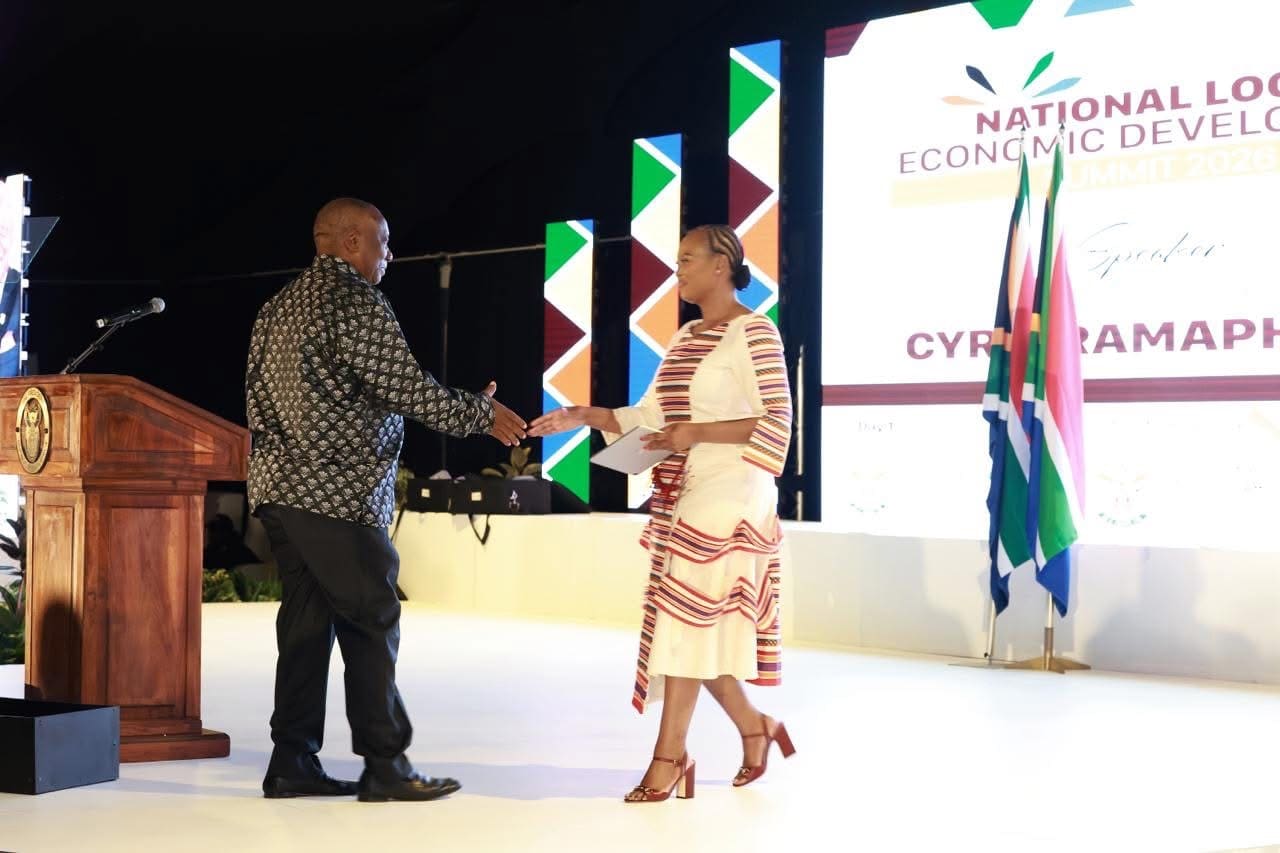
Addressing the National Local Economic Development Summit in Ekurhuleni on Tuesday, President Cyril Ramaphosa positioned local government as central to economic recovery, warning that national investment commitments will not translate into growth without functioning municipal systems.
The summit follows the recent South African Investment Conference (SAIC), where R890 billion in investment pledges were secured. However, Ramaphosa made it clear that the real test lies in execution at local level.
“When investors build their business in our country, they don’t set up factories on the lawns of the Union Buildings. This investment takes place in metros, cities, towns and villages,” he said.
He described municipalities as the “engine room of development”, but acknowledged that systemic weaknesses continue to undermine their role in enabling economic activity. This is particularly significant for SMEs, which rely heavily on consistent municipal services, accessible infrastructure and functioning local systems to sustain daily operations.
Infrastructure failures undermine SME activity
Drawing on findings from the Auditor-General, Ramaphosa pointed to persistent failures in financial management, infrastructure maintenance and procurement systems.
“These challenges translate into unreliable electricity, water insecurity, poor roads and unsafe trading environments,” he said.
For SMEs, these failures are not abstract governance issues but direct operational risks. Unreliable electricity disrupts production, poor roads affect logistics and deliveries, and unsafe trading environments limit trading hours and customer access.
Ramaphosa added that without addressing governance failures, local economic development would remain constrained, stating that “without fixing governance, we cannot fix service delivery and without fixing service delivery, we cannot unlock local economic development.”
The emphasis on infrastructure was a central theme of the address, with Ramaphosa highlighting energy, water, transport and logistics as the foundation of economic growth. While progress has been made at national level in stabilising electricity supply and improving logistics, he said municipalities must now translate this into local outcomes that businesses can actually rely on.
A key concern raised was underinvestment in infrastructure maintenance. National Treasury guidelines require municipalities to allocate eight percent of the carrying value of assets to maintenance, yet many are budgeting less than 1 percent, increasing the risk of system failures that disproportionately affect smaller businesses.
Regulatory inefficiencies add pressure on small businesses
The summit also highlighted the role of municipalities in shaping the ease of doing business, with regulatory inefficiencies identified as a barrier to both large-scale investment and small enterprise growth.
Ramaphosa noted that while some municipalities have made progress in streamlining approvals and licensing, these remain exceptions.
“More often than not, bureaucratic delays at municipal level prevent local investments from getting over the line,” he said.
For SMEs, these delays often determine whether a business can formally operate, expand or access funding and support programmes tied to compliance.
Complementing this, Minister of Small Business Development Stella Ndabeni-Abrahams said municipalities are often where businesses encounter regulatory obstacles.
“Municipalities are where investors and MSMEs foremost experience red tape and the ease of doing business,” she said.
She added that delays in licensing and restrictive bylaws continue to limit business operations, particularly for small enterprises operating in townships and informal markets.
From policy ambition to SME reality
Both speakers emphasised that local economic development must move beyond isolated projects to become a coordinated system supported by reliable services, efficient administration and aligned planning.
Ramaphosa called for the District Development Model to be used more effectively to coordinate investment and infrastructure rollout, while Ndabeni-Abrahams stressed the need for municipalities to function as “economic enablers” rather than administrative bodies.
As government seeks to reposition local economic development as a central pillar of growth, the summit underscored a key reality: without functional municipalities, national policy and investment commitments are unlikely to translate into meaningful outcomes for SMEs, which depend on stable, predictable local environments to survive and scale.