











































As winter sets in and temperatures drop across South Africa, demand for charcoal and heating fuel increases sharply, placing pressure on local producers to meet growing household and commercial energy needs.
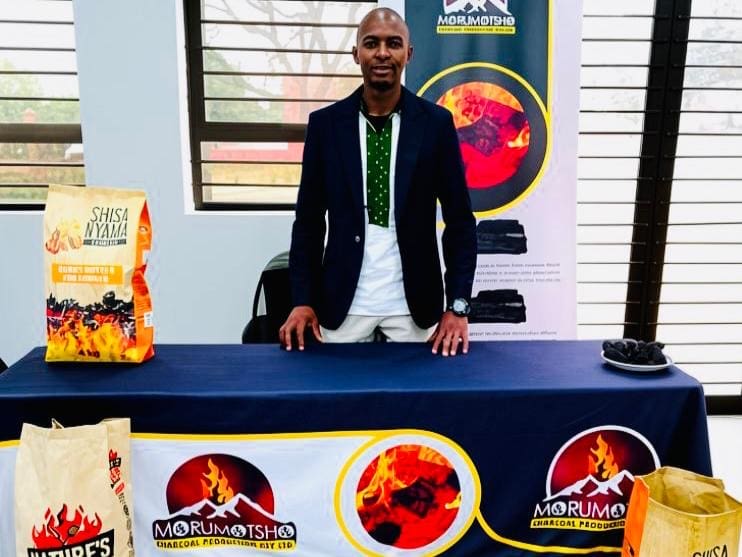
For Matatiele-based entrepreneur Atang Justice Ramabele, this seasonal spike is part of a broader mission that combines environmental restoration with sustainable business development.
Ramabele is the founder of Morumotsho Charcoal Production, established in 2020 with a focus on clearing invasive black and silver wattle trees and converting them into charcoal and briquettes.
The idea was developed during his internship with Environmental and Rural Solutions (ERS), in partnership with WWF and First Rand, where he identified invasive alien plants as both an ecological threat and an opportunity for green industrial production.
“The initiative is driven by the need to clear alien and invasive wattle responsibly,” Ramabele said.
“It contributes to water security, restoration of the landscape to its natural state, rehabilitation of grazelands, and overall ecological balance.”
The business name Morumotsho, meaning “black forest” in Sotho, is inspired by a wattle-infested hill that supplies the primary raw material for production.
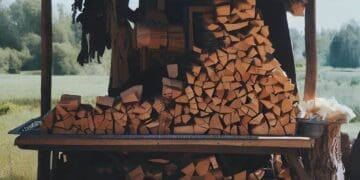
Morumotsho Charcoal Production operates through a structured process that begins with land clearing, where invasive trees are felled and treated with herbicide to prevent regrowth. The biomass is then transported, dried for three to six weeks, and tested for moisture content before being cut and stacked into kilns.
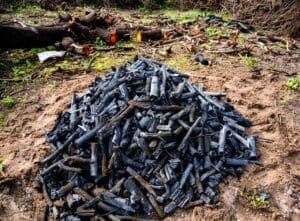
The carbonisation process takes place under controlled heat conditions between 350°C and 500°C for approximately six to eight hours. After cooling, the charcoal is sorted into different grades and packaged into 5kg, 25kg, 50kg and 80kg bags before being stored for distribution.
A second production line converts fine charcoal waste into briquettes using crushing, binding and compression methods, ensuring that almost all material is reused.
“We don’t waste anything,” Ramabele said. “Even the fine charcoal that would normally be discarded is processed into briquettes, which allows us to serve two different markets.”
The business produces two main products, lump charcoal and briquettes. Lump charcoal is fast-burning, high-heat fuel used mainly for braais and restaurants, while briquettes are slower-burning and preferred by households and catering businesses.
Prices vary depending on volume and buyer agreements. A standard 5kg “Shisa Nyama” charcoal pack is sold in bulk packaging of 100 units at approximately R500, while 4kg charcoal and briquette packs are sold at around R618 per 100-unit batch.
Distribution takes place through retail stores, garages, wholesalers, e-commerce platforms and direct business-to-business supply chains.
“Our customers are retailers, wholesalers, garages and distributors both locally and in other provinces like KwaZulu-Natal,” Ramabele explained. “We also supply bulk buyers depending on demand and contracts.”
The business reports a steady demand of around 10 tonnes of charcoal per week, with approximately 500 bags of 5kg charcoal distributed weekly across its supply channels.
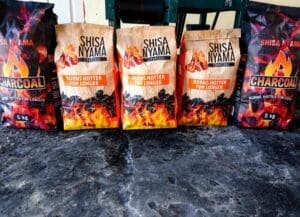
Packaging materials include 25kg, 50kg and 80kg sacks sourced from retail suppliers in Matatiele, while bulk charcoal bags are sourced from Shakiles Industrial Distributors in Durban.
Key operational suppliers include LCB Whittle & Sons, Matat Engineering and Husqvarna, which provide tools, machinery and equipment used in harvesting, processing and production.
The business currently employs seven people, all trained in chainsaw operation, herbicide application, health and safety, first aid, fire fighting and kiln operation.
Beyond employment, the project supports environmental restoration by removing invasive species that threaten water security and biodiversity, while also improving land productivity.
Despite its growth, Ramabele says logistics remains a major challenge, particularly transporting heavy biomass from rural harvesting sites using tractors or 4-ton trucks, which increases operational costs.
Regulatory compliance and access to specialised machinery also limit faster expansion.
Looking ahead, Morumotsho Charcoal Production plans to expand into new biomass value chains, scale production, enter export markets and invest in advanced kilns and automation systems.
“The best green businesses don’t just use nature they heal it,” Ramabele said.